Pacific Biochar x Shasta Sustainable Resource Management
Biochar Carbon Removal Project
Project Summary:
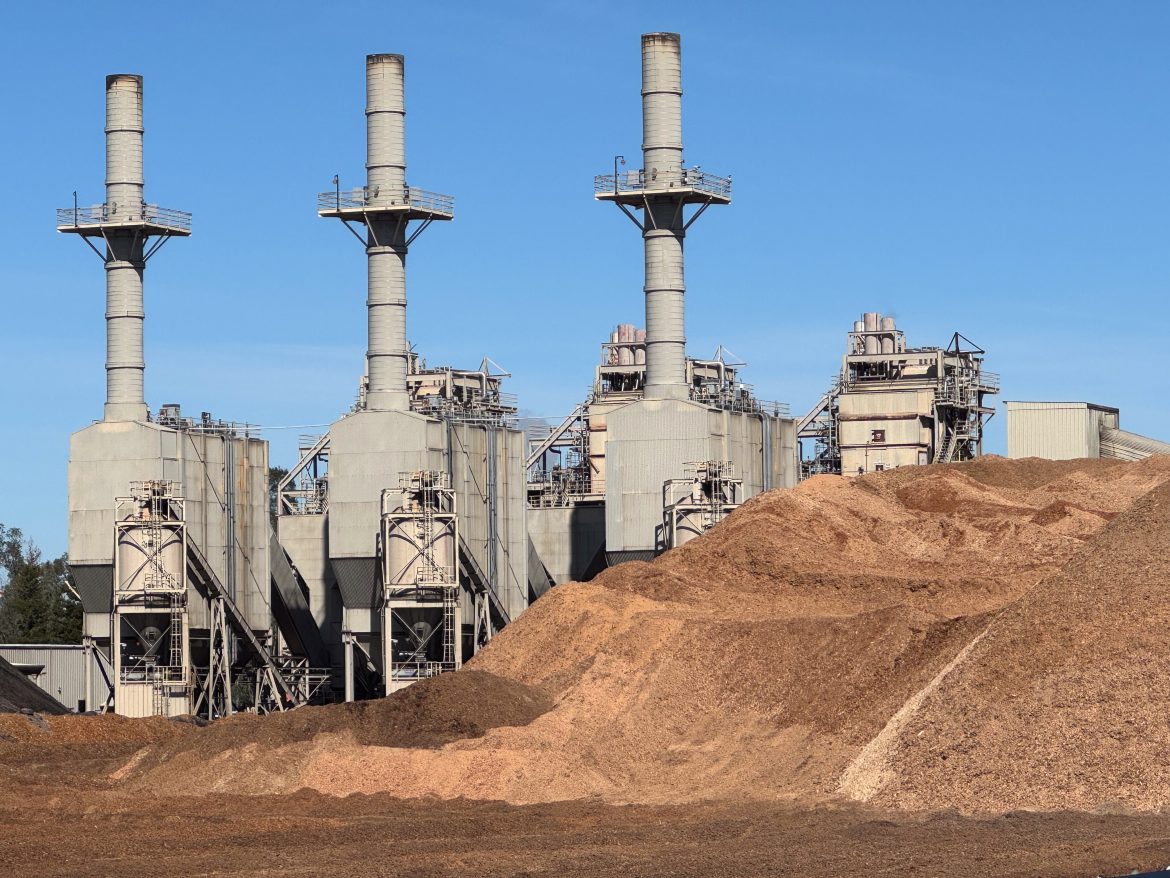
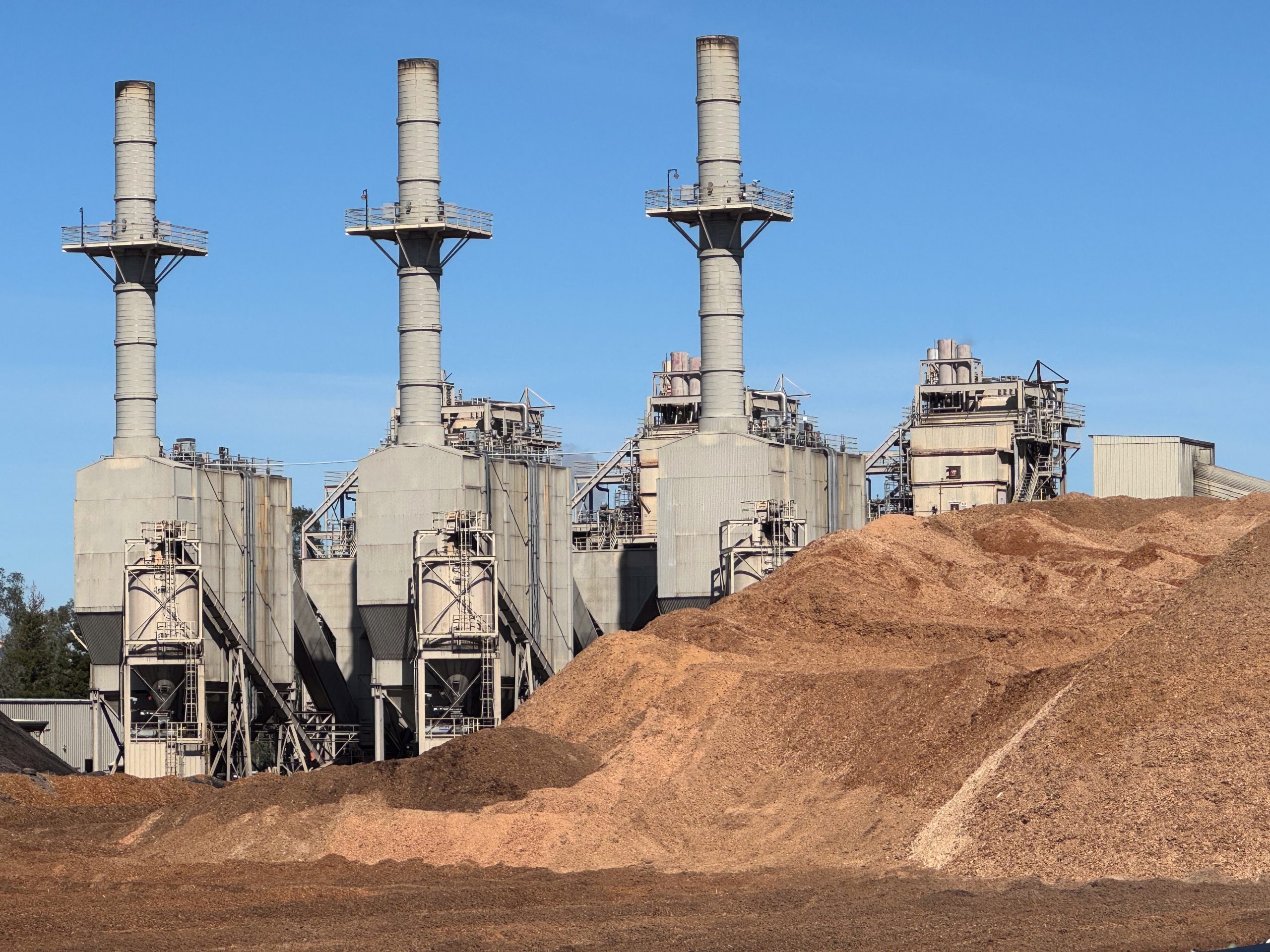
Pacific Biochar Benefit Corporation partners with Shasta Sustainable Resource Management, Anderson, CA to harvest biochar from their bioenergy facility. The Shasta SRM facility is one of northern California’s largest wood-fired power plants. The facility provides dependable, environmentally safe disposal of wood waste and forest residue from Shasta County and surrounding areas, while generating clean electricity for sale to the local utility. Processing up to 1,250 tons per day, Shasta SRM has the electric-generating capacity of 55 MW, the equivalent of supplying the electrical needs of thousands of California homes and businesses as well as its own operations.
Shasta SRM plays a key role in the State of California’s effort to safely manage forest residue in high hazard areas to reduce the risk of forest fires. Shasta also operates a Wood Waste Recycling Program year round, which is offered to members of the community at no charge.
The biochar produced is deployed primarily to farmers and other landowners in Northern California to improve crop production and leave behind a legacy of fertile soil.
Project Start Date:
2024
Project Location:
Anderson, California, USA
Annual Production Capacity:
Roughly 3,000+ tonnes of biochar
Roughly 9,000+ tonnes of CO2e
Standard and Methodology:
Project Description Documents:
Anticipated for delivery in Q2 of 2026
Catastrophic Wildfire Mitigation
The forestry management practices involved with timber production and harvesting, from which the forestry residues used in this project are derived, follow sustainabilty practices which have a positive influence in mitigating against catastrophic wildfire (refenence link here). The forest areas in which this project takes place in risk of catastrophic wildfire, as can be viewed via CalFire fire hazard severity zones.
Avoided Emissions of Composting
Biochar amendments in composting can substantially reduce greenhouse gas emissions, particularly methane, nitrous oxide, and ammonia. A UC Davis review for California Air Resources Board (CARB) reported a mean methane emission reduction of 41% when biochar was incorporated into early-stage dairy manure compost (reference here). A series of recent UC Merced studies observed methane reductions averaging 79% and 58%% compared to manure compost not treated with biochar, respectively (references here and here, respectively). Biochar materials from this project are commonly blended with compost prior to soil application, with some compost producers and dairies blending the biochar at the early stage of composting. The likelihood and practice of compost practitioners incorporating biochar into early stage compost has been observed to increase with increased availability of biochar and its use in farming. Additionally, Pacific Biochar sees an opportunity to scale adoption through financial incentive in the form of a methane reduction crediting methodology.
Agronomic Benefits
A systematic review of over 1,500 studies across 26 meta-analyses showed consistent agronomic benefits from biochar. Crop yields increased by an average of 10%, while water use efficiency improved by 20%. Root biomass and root length increased by 30% and 50%, respectively. Soil microbial biomass carbon and nitrogen, total bacteria, and total fungi each increased by around 20%, while soil organic carbon and available phosphorus rose by 40%. Additionally, nitrate leaching was reduced by 10% and nitrous oxide emissions decreased by 35%, with heavy metal concentrations in plant tissue falling by 20–40%.
Oasis Vineyard Field Trial (see 3rd harvest report here and 5th report here):
Pacific Biochar’s field trials at Oasis Vineyard demonstrated significant performance gains when biochar was applied with or without compost. Over five harvests, yield improvements averaged more than 35% where biochar and compost were applied together, with gains exceeding 70% in low-yielding years. All treatments were profitable by the second harvest, with per-acre revenue increases by the fifth harvest of $9,752 for biochar, $12,569 for compost, and $14,937 for the combined treatment. These results were achieved without affecting grape quality and under consistent irrigation and fertilization regimes, highlighting improved input efficiency.
Water Conservation
Biochar improves soil water dynamics by increasing water retention in coarse soils and enhancing water infiltration in clay-rich soils. A 2020 meta-analysis by Razzaghi et al. found that biochar additions increased available water content by 45% in coarse-textured soils, 21% in medium-textured soils, and 14% in fine-textured soils. These changes contribute to greater drought resilience and improved water productivity per unit applied, addressing critical water security challenges in agriculture.
Nutrient Conservation
Biochar has been shown to reduce the loss of nitrogen and phosphorus from soils and compost. For instance, a study by Laird et al. (2010) found that biochar applications reduced total nitrogen leaching by 11% and dissolved phosphorus leaching by 69% following manure application. This nutrient retention helps reduce environmental pollution while keeping essential nutrients available to plants, functioning similarly to a filtration system in the soil matrix.
Intergenerational Benefits
Although no modern field trials have confirmed intergenerational benefits of biochar, historical and contextual evidence supports the hypothesis. Pyrogenic organic matter, a naturally occurring analogue to biochar, is recognized as a stable component of global soil organic matter and contributes significantly to soil fertility (links here, here, and here). Examples of Anthropogenic Dark Earths (ADEs), such as Terra Preta in the Amazon and similar soils in Europe, Australia, and Africa, suggest that biochar applications made generations ago continue to deliver agronomic benefits today. Based on this evidence, it is reasonable to expect that today’s biochar applications will provide long-term soil health and climate adaptation benefits extending across generations.
People and Communities
Communities near Pacific Biochar’s operations benefit from reduced wildfire risk, which improves air quality and lowers health and economic risks from smoke and fire damage. Farmers who use biochar also benefit from improved soil quality, higher crop productivity, and enhanced water and fertilizer efficiency. These outcomes contribute to long-term food security, economic stability, and land stewardship across rural and agricultural regions.